


Closing the Loop: Circular Aquaculture with Black Soldier Fly Chitin and Chitosan


Aquaculture stands at a critical juncture. The sector has become the world's primary source of farmed seafood, providing nearly half of all aquatic protein for human consumption. Yet this rapid growth comes with a dual challenge: managing substantial waste streams whilst securing sustainable sources of feed ingredients. Global aquaculture generates over 80% of its wastewater untreated, discharging nutrient-rich sludge and effluent that strain both freshwater resources and marine ecosystems (Kurniawan et al., 2025).
Simultaneously, dependence on fishmeal and fish oil—increasingly scarce and costly commodities—threatens the economic viability and sustainability credentials of farming operations. The solution lies not in addressing these problems separately, but in reimagining them as opportunities through integrated circular systems. This is where the "Fish–Fly–Field" model emerges as a transformative framework, one that leverages Black Soldier Fly (Hermetia illucens) biology to valorise aquaculture waste into multiple value streams whilst simultaneously producing high-value functional materials through chitin and chitosan processing.
The Problem: Waste and Inputs in Modern Aquaculture

Contemporary aquaculture produces vast quantities of waste that demand careful management. Intensive systems generate raw sludge comprising more than 90% water, rich in organic solids including nitrogen (N) and phosphorus (P)—precisely the materials that pose environmental risks if improperly managed. Global aquaculture produces approximately 20.15 m³/kg of wastewater annually across all culture systems, with the majority discharged untreated to surrounding water bodies (Schmitt et al., 2023). This discharge creates cascading environmental problems: eutrophication from nutrient loading, reduced dissolved oxygen from organic decomposition, and bioaccumulation of contaminants in aquatic food webs.
Conventionally, sludge management has relied on settling ponds, dewatering, land-spreading, or costly off-site treatment—all energy-intensive pathways that convert waste from a productive liability into a financial burden. The economic impact is substantial: disposal costs consume significant operational budgets whilst creating minimal recovery value. Beyond economics, regulatory pressures are tightening. Environmental quality standards, discharge permits, and growing scrutiny from certification bodies (ASC, BAP) demand that farms demonstrate responsible waste handling (Masi et al., 2025).
Parallel to the waste challenge lies the feed conundrum. Farmed carnivorous species such as salmon and shrimp traditionally rely on fishmeal and fish oil derived from wild-caught pelagic fish. These ingredients account for substantial portions of aquafeed costs and environmental footprints. Price volatility, supply chain disruptions, and mounting pressure to reduce wild fisheries extraction have created urgent demand for sustainable alternatives. The sector faces an uncomfortable reality: the most environmentally and economically efficient path forward requires transforming aquaculture waste from a disposal problem into a feedstock with economic value—and linking that transformation to the production of feed ingredients and other high-value outputs.
Enter the Black Soldier Fly: Turning Fish Waste into High-Value Biomass
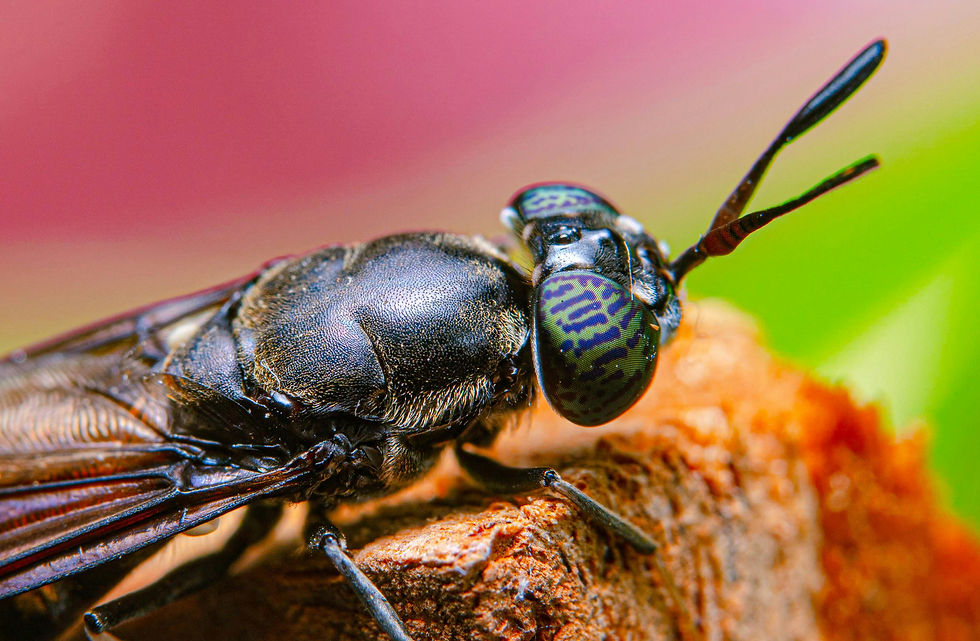
Black Soldier Fly larvae represent a biological solution to both challenges. These larvae are voracious converters of organic waste, capable of rapidly accumulating protein and fat whilst dramatically reducing waste volume. Research demonstrates that BSF larvae can reduce incoming organic waste by 50–80%, concentrating nutrients into larval biomass whilst producing a mineral-rich residual material termed frass (Clement et al., 2021).
Fresh or processed aquaculture sludge has emerged as a viable substrate for BSF rearing. Studies confirm that aquaculture sludge from pikeperch (Sander lucioperca) production can be mixed with standard rearing substrates at varying ratios, allowing larvae to develop successfully on waste-supplemented diets (Schmitt et al., 2023). When aquaculture sludge constitutes 100% of the feedstock (after appropriate pre-processing), larvae continue to grow and accumulate biomass—though optimal results occur when sludge comprises 50–75% of the total substrate, paired with complementary nutrient sources to ensure balanced development.
Bioconversion performance metrics underscore the efficiency of this approach. From one tonne of food waste combined with 0.25 tonnes of rice hull powder, a well-managed BSF bioconversion facility produces approximately 31 kg of dried pre-pupae and 300 kg of mature compost (Klotins et al., 2021). Waste reduction efficiency reaches 72% for balanced substrates, with biomass conversion ratios (BCR) of 20–25%—remarkably high compared to traditional composting or anaerobic digestion. Critically, 48% of carbon and 58% of nitrogen from input waste are converted into usable BSF biomass or frass, enabling nutrient recovery that aligns with circular economy principles (El Deen et al., 2023).
Safety and regulatory compliance remain paramount considerations. Aquaculture sludge can contain heavy metals, veterinary drugs, persistent organic pollutants, and pathogenic microorganisms. Research from the SecureFeed project, which examined BSF reared on Norwegian salmon sludge, reveals that whilst most sludge samples meet threshold values for low-trophic animal feed, some samples exceeded limits for cadmium and arsenic (Hagemann et al., 2024). Critically, BSF larvae and frass can bioaccumulate these contaminants, potentially transferring them up the food chain. This necessitates rigorous pre-screening of sludge feedstock, monitoring of larval biomass composition, and adherence to evolving regulatory frameworks. When implemented with proper oversight, however, BSF rearing on aquaculture sludge becomes a controllable, de-risked process.
Larvae as Feed: Closing the Loop Back to Fish and Shrimp

BSF larvae and larval meal represent high-quality, sustainable alternatives to fishmeal. The nutritional profile is compelling: BSF larvae contain approximately 40% protein, 7% fat, and 20% chitin (by dry weight) (Bruni et al., 2018). The protein comprises a well-balanced amino acid profile comparable to premium fishmeal, with high digestibility and favourable ratios of essential amino acids. The fat fraction includes medium-chain lauric acid, imparting natural antimicrobial properties.
Trial results confirm the practical viability of BSF-based feeds. When juvenile tilapia were fed diets containing 1.42–1.45% chitosan (delivered via BSF meal), growth performance improved significantly, with enhanced weight gain, specific growth rate, and daily growth index (Zhang et al., 2024). Studies on juvenile snakehead (Channa striata) demonstrate that up to 50% of dietary fishmeal can be replaced with BSF larvae meal without adversely affecting growth, nutrient utilisation, or health markers (Pascon et al., 2024). Research on Pacific white shrimp (Penaeus vannamei) shows that complete replacement of fishmeal with black soldier fly larvae meal is achievable in nursery diets, with shrimp demonstrating robust growth and survival (Kariuki et al., 2024). Atlantic salmon, rainbow trout, and multiple aquaculture species similarly accept BSF meal at inclusion rates of 25–50%, with feed conversion ratios and growth metrics remaining competitive (Li et al., 2025).
Sustainability gains extend beyond nutritional equivalence. Replacing fishmeal with BSF larvae meal reduces dependence on wild-caught pelagic fish, thereby alleviating pressure on marine ecosystems. Life cycle assessments indicate that substituting fishmeal with BSF-derived ingredients can reduce global warming potential by up to 30% compared to conventional feeds (Mertenat et al., 2019). Furthermore, these sustainability improvements align aquaculture producers with certification standards (ASC, BAP) and investor expectations, creating market differentiation and access to premium value chains (Chary et al., 2024).
Frass to Field: Nutrient Recycling into Crop Production

BSF frass—the digestive residue remaining after larvae process organic substrate—represents a second major output stream. This material is rich in organic matter, nitrogen, phosphorus, potassium, and beneficial microorganisms. Typical BSF frass contains approximately 13 g/kg nitrogen, 8.4 g/kg phosphorus, and significant quantities of potassium and micronutrients alongside humic substances that improve soil structure (Mohan et al., 2024).
Composting of aquaculture sludge through windrow methods yields nutrient-dense outputs suitable for agricultural application. Research demonstrates that 49–64% of nitrogen present in aquaculture waste is successfully recovered through composting, with the resulting compost serving as an effective soil amendment (Wang & Chen, 2005). When applied to agricultural land, these composts release nitrogen gradually over extended periods (210+ days), ensuring plant availability whilst minimising leaching losses and environmental contamination (Iber et al., 2023).
From a circular economy perspective, frass valorisation closes critical nutrient loops. Nutrients extracted from aquaculture systems—originating ultimately from fish feed inputs—are recaptured and reintegrated into crop production. This reduces reliance on synthetic fertilisers whilst enhancing soil organic matter, water retention, and beneficial microbial communities. Regional integration models linking aquaculture farms, BSF facilities, and crop operations create localised nutrient cycles that strengthen agricultural resilience and reduce transportation footprints (Ravi Kumar, 2000).
Beyond Feed and Fertiliser: BSF Chitin and Chitosan as High-Value Outputs
The cuticle of BSF larvae contains abundant chitin, a biopolymer comprising approximately 20% of the larval dry weight. Through deacetylation, chitin is converted into chitosan—a water-soluble polymer with remarkable functional properties (Bhavsar et al., 2021). BSF-derived chitosan offers distinct advantages over traditional crustacean-derived sources: it originates from a renewable, land-based production system with year-round availability and tight traceability, avoiding pressure on wild shellfish populations and enabling integration into fully traceable, sustainable value chains.

BSF chitosan applications naturally extend the circular model. In aquaculture settings, chitosan functions as a natural coagulant and flocculant for polishing effluent water, removing suspended solids, heavy metals, and organic pollutants through adsorption and charge neutralisation (Picos-Corrales et al., 2020). Research demonstrates that chitosan effectively removes turbidity, phosphate, and metal ions from wastewater, achieving water quality improvements comparable to conventional chemical coagulants whilst avoiding synthetic residues (Sarode et al., 2019).
In agricultural and horticultural contexts, BSF-derived chitosan acts as a biostimulant, enhancing plant growth, stress tolerance, and disease resistance through innate immunomodulation (Tulli et al., 2024). Chitosan induces production of defence-related compounds, strengthens cellular structures, and promotes beneficial rhizosphere microbial communities. Applied to soil or foliage, chitosan improves water retention and nutrient availability whilst offering antimicrobial protection against pathogens (Eissa et al., 2024).
In materials and packaging applications, BSF chitosan enables production of biodegradable films and coatings for seafood and agricultural products, closing nutrient loops within food systems themselves. These coatings extend shelf-life, reduce plastic waste, and provide consumers with transparent sustainability narratives linked to aquaculture and agricultural production (Zheng et al., 2019).
Designing a Fish–Fly–Field System: Flows, Modules, and Business Models
The Fish–Fly–Field concept translates into tangible operational flows. Aquaculture facilities generate sludge and effluent; these waste streams are directed to co-located or nearby BSF rearing units where larvae convert sludge into biomass. Harvested larvae are processed into aquafeed, creating a direct loop whereby aquaculture waste becomes aquaculture feed. Simultaneously, BSF frass is collected and processed into organic fertiliser for nearby crop production, establishing agricultural linkages. Chitin is extracted from spent larval exuvia or non-viable larvae, processed into chitosan, and deployed across aquaculture (water treatment), agriculture (biostimulant), and materials applications (Guerreiro et al., 2020).
Implementation models vary by scale and geography. On-farm BSF units suit medium to large aquaculture operations with sufficient waste volumes and nearby agricultural land. Regional BSF hubs, serving clusters of 5–15 farms, capture economies of scale whilst enabling specialised processing and quality control (Abdel-Ghany & Salem, 2020). Multi-sector partnerships—between fish farms, BSF operators, feed mills, agricultural enterprises, and materials producers—distribute risk and monetise multiple outputs simultaneously (Clement et al., 2021).
Business models evolve accordingly. Waste-processing service models generate revenue from tipping fees and operational efficiencies. Long-term offtake contracts for larvae, frass, or chitosan create stable revenue streams for BSF operators. Co-ownership structures or joint ventures between aquaculture operators and BSF processors align incentives and distribute upside. Digital monitoring systems—tracking waste flows, nutrient balances, and sustainability metrics in real-time—enable data-driven optimisation and transparent reporting to investors and retailers (Mertenat et al., 2019).
Environmental and ESG Benefits

Fish–Fly–Field systems deliver measurable environmental outcomes. Waste volume reductions of 50–80% alleviate disposal challenges and associated emissions. Diverted nutrients generate organic fertilisers and biostimulants, reducing synthetic chemical production. Reduced dependence on wild-caught fishmeal alleviates pressure on marine ecosystems. Overall resource efficiency per tonne of fish produced improves dramatically: fewer inputs (soy, fishmeal) are required; more outputs (feed, fertiliser, materials) are recovered; and waste is treated as a resource rather than a liability (Klotins et al., 2021).
Greenhouse gas emissions reductions are substantial. Direct CO₂ emissions from BSF waste processing are approximately 47 times lower than conventional windrow composting (Mertenat et al., 2019). Lifecycle assessments of feed substitution indicate GHG reductions of 30% or greater compared to conventional aquafeed production (Masi et al., 2025).
These outcomes align with critical policy and investor frameworks. The EU Circular Economy Action Plan and UK strategies explicitly prioritise aquaculture waste valorisation. Corporate ESG reporting standards (GRI 13, SASB) now require aquaculture companies to disclose waste management and feed sourcing practices. Investor coalitions such as FAIRR are actively engaging aquaculture companies on climate, biodiversity, and feed sustainability. ASC and BAP certification schemes reward sustainable feed sourcing and waste management, opening premium market access (Chary et al., 2024). Fish–Fly–Field systems enable aquaculture companies to demonstrate tangible progress on ESG metrics, access capital at favourable terms, and secure retail partnerships demanding sustainability transparency.
Conclusion
The Fish–Fly–Field model demonstrates that aquaculture waste is not inevitable; it is an unrealised asset awaiting mobilisation. By integrating Black Soldier Fly larvae rearing with aquaculture operations, the sector can simultaneously address its most pressing challenges: waste management, feed sustainability, and nutrient recycling (Kurniawan et al., 2025). Larvae become aquafeed, frass becomes crop fertiliser, and BSF chitin becomes high-value functional materials for water treatment, agriculture, and sustainable packaging. These elements are not speculative concepts; each has been validated through peer-reviewed research and pilot projects across Europe, Asia, and beyond (Clement et al., 2021).
The greatest value emerges when integration is deliberate and systemic. Piecemeal implementations—isolated BSF units or standalone fertiliser production—capture only partial benefits. Fully integrated Fish–Fly–Field systems, by contrast, create resilient, multi-revenue business models that strengthen both environmental and economic performance.
Entoplast is uniquely positioned as a strategic partner for building such integrated systems. Our specialisation in BSF-derived chitin and chitosan—produced through proprietary, greener processes—provides the knowledge-intensive materials layer that transforms basic waste conversion into premium circular value chains. We bring expertise in chitosan applications across aquaculture, agriculture, and materials sectors, enabling clients to optimise multiple outputs simultaneously. Our understanding of BSF biology, processing efficiency, and quality control de-risks the technical challenges that deter many operators.
We invite aquaculture operators, BSF producers, feed mills, and impact investors to collaborate with Entoplast on Fish–Fly–Field feasibility studies, pilot projects, and scale-up initiatives. Whether you operate a single farm seeking integrated waste solutions or manage a portfolio of aquaculture assets seeking transformational sustainability improvements, Entoplast provides the technical expertise and materials partnership to unlock the full potential of circular aquaculture systems.
Contact Entoplast today to explore how Fish–Fly–Field concepts can be tailored to your regional context, species portfolio, and waste streams. Together, we can build a future in which aquaculture waste becomes a wellspring of value—nourishing fish, crops, and sustainable biomaterials in an integrated circle of productivity and regeneration.


Comments