


Nature's Ultimate Recycler: How Black Soldier Flies Convert Waste Into Sustainable Chitin and Chitosan


Organic waste is a mounting global problem – yet nature already offers a solution. The larvae of the black soldier fly (Hermetia illucens) consume huge amounts of organic waste, converting it into valuable biomass. Among the products is chitin, a natural polymer, which can be processed into chitosan – a biodegradable material with many industrial uses. By feeding on food scraps, manure and other waste, BSF larvae (the “ultimate recyclers”) help close the loop in a circular bioeconomy, turning waste liabilities into sustainable biopolymers (Tepper et al., 2024).
Introduction and context
Worldwide, roughly 40–70% of food and organic waste ends up in landfills, producing methane and contributing significantly to greenhouse gas emissions. In response, policymakers and industry are pursuing circular economy strategies – systems that reuse, recycle and regenerate resources. A circular bioeconomy valorizes waste streams into new products, rather than disposing of them. Black soldier flies fit this model perfectly. Their larvae thrive on diverse organic wastes – from agri-food byproducts to municipal compostables – rapidly converting them into nutrient-rich larvae and residue. This dual benefit – waste reduction and resource generation – is a keystone of circular bioeconomy thinking (Tepper et al., 2024; Bruno et al., 2025).
Like other flies, the BSF has a holometabolous life cycle with five stages: egg, larva (with multiple instars), prepupa, pupa and adult. Females lay hundreds of eggs on decaying organic matter; the emerging larvae voraciously feed and grow over ~2–3 weeks, consuming 50% or more of their body weight in waste each day (Schäfer, 2023). After reaching maturity, larvae pupate and emerge as non-feeding adults. Only the larval stage is used in waste bioconversion. Importantly, much of the chitin (and eventual chitosan) comes from the larvae and especially the pupal exuviae (shed skins). Pupal exuviae alone can contain ~25–35% chitin by dry weight, making them a predictable source of raw material.
BSF can be reared in compact, high-density units and can tolerate fluctuations in feed composition and climate (González-Lara et al., 2024). This efficient, small-footprint farming – often in urban or peri-urban settings – has low water use and no need for arable land. For businesses and municipalities, BSF-based systems offer a dual promise: waste management and biomass production, aligning with sustainability goals (Bruno et al., 2025).
Biology and physiology

BSF larvae thrive on diverse feedstocks thanks to their powerful digestive systems and gut microbiomes. The larvae’s midgut is a bioconversion hub, rich in digestive enzymes and symbiotic microbes (Bruno et al., 2025). Studies show that larval gut tissue has very high levels of amylases, lipases and proteases – enzymes that break down starches, fats and proteins – far exceeding the levels found in the fly’s saliva or other tissues. In practical terms, this means BSF larvae can efficiently decompose proteins, oils and even tough plant fibers in wastes.
The gut microbiome further enhances waste breakdown. Key bacterial species (e.g. Enterococcus, Dysgonomonas, Actinomyces among a “core” community) assist in nutrient digestion, pathogen defense and detoxification. For example, certain gut bacteria produce cellulases and other lignocellulases that help digest fibrous substrates (Bruno et al., 2025; Zheng et al., 2025). Others metabolize toxins like pesticides or pharmaceuticals often found in waste, effectively “cleaning up” the biomass (Frontiers, 2025). As a result, BSF larvae grow robustly on varied diets (vegetable waste, manure, brewery grains, etc.), converting them into uniform larval biomass. Feed composition does affect output: high-energy diets (e.g. food waste with fats) yield fattier larvae, whereas fiber-rich diets increase protein and chitin fractions. This feedstock flexibility is a hallmark of BSF’s physiology.
Production process overview
In practice, a BSF biowaste-to-biopolymer process follows several steps:
Waste Collection & Feeding – Organic wastes (food scraps, agricultural byproducts, organic municipal waste) are collected and pre-processed (sorted, ground, moistened) into BSF feed.
Larval Rearing – BSF eggs are incubated for ~3 days, then synchronized larvae are placed on feed trays. Over ~2–3 weeks, larvae consume the waste, reducing its volume by ~50–70% and increasing biomass. Good practice involves controlling moisture, temperature (~27–30°C), and removing excess mold or pests.
Harvest & Separation – Mature larvae are harvested (sifting or flotation). The remaining residue (“frass”) is itself a valuable soil amendment but largely free of larvae. Harvested larvae are rinsed and optionally fasted to clear gut contents.
Chitin Extraction – Dried larvae (or pupal shells) undergo demineralization (usually dilute acid, e.g. HCl) to remove salts and calcium carbonate, followed by deproteinization (alkali treatment, e.g. NaOH) to dissolve proteins. Each step may be repeated to purify the chitin. Emerging “raw” chitin is then washed and dried. (Note: insect chitin usually has low mineral content, so demineralization is easier and greener than with crustacean shells.)
Chitosan Production – Chitin is converted to chitosan by deacetylation, typically with concentrated alkali at high temperature. This removes acetyl groups, yielding chitosan with free amino groups. Reaction conditions (alkali strength, time, temperature) control the final Degree of Deacetylation (DDA) and molecular weight. Chitosan is then washed, filtered and dried. Analytical tests (e.g. IR spectroscopy, X-ray diffraction) confirm structure, crystallinity and purity (see illustrative figure: BSF chitin XRD pattern similar to commercial chitin).
The result is high-quality chitosan with properties comparable to crustacean-derived material. For example, BSF-sourced chitosan typically achieves >90% deacetylation and good thermal stability. Importantly, the ventral defatting of chitin is often done first because BSF larvae contain 30–40% lipids; lipid removal (via solvent extraction or pressing) increases chitin yield and quality. Some cutting-edge methods (e.g. enzymatic deproteinization or Deep Eutectic Solvents) are being explored to make extraction greener.
Applications and market implications
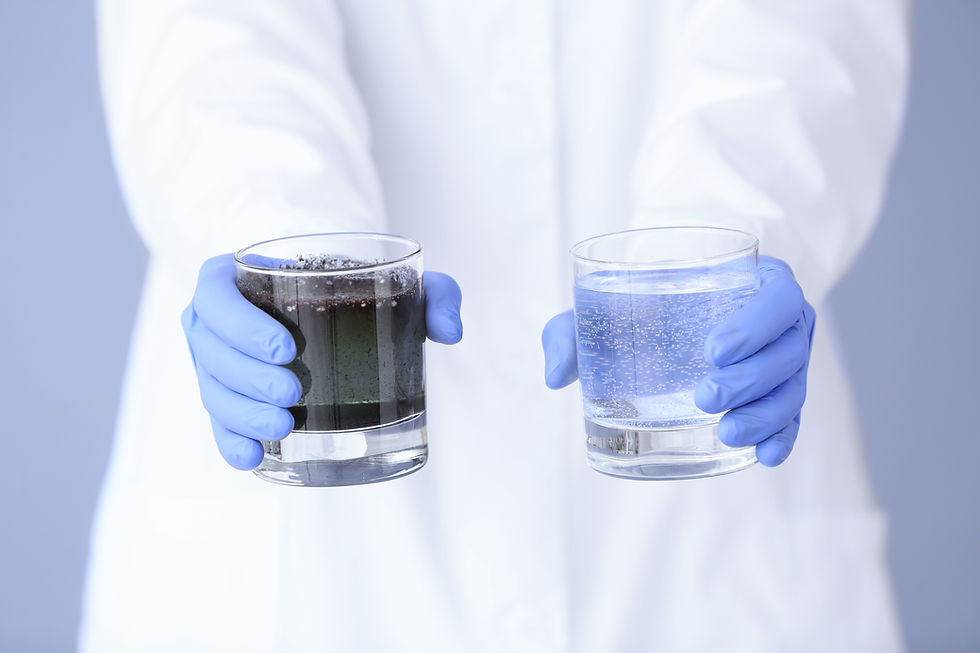
Chitin and chitosan have long been valued biopolymers (see “Chitosan 101”) used in wound dressings, water purification, agriculture and biodegradable packaging. BSF-derived chitosan is chemically identical to that from crustaceans (its molecular backbone of N-acetyl-glucosamine units is the same) but with some practical advantages. For one, insect chitosan avoids shellfish allergens and heavy-metal contaminants often associated with shrimp/crab shells. It also tends to contain less residual calcium, simplifying processing.
In terms of use cases, recent work highlights many possibilities: BSF-chitosan shows comparable or superior antimicrobial and antioxidant activity to commercial chitosan. It has been tested in cosmetics and wound healing; in a strawberry coating study, BSF-derived chitosan extended shelf life by slowing decay (iScience, 2023). In water treatment, chitosan flakes and beads can adsorb dyes and heavy metals. Agricultural uses include seed coatings and soil amendments: chitin accelerates beneficial soil microbes and can boost plant defense (it’s a known biostimulant). Innovative bioplastics and packaging films have been made by blending BSF chitosan with other biopolymers; these films match the strength of conventional plastic wraps and biodegrade rapidly. In biomedical fields, early studies suggest BSF chitosan has low cytotoxicity and can form scaffolds for tissue engineering (similar to crustacean chitosan).
The market outlook is promising. Global chitin demand is rising, with some analyses projecting multi-billion-dollar markets by 2030. Insect-derived chitin taps into this demand. As Lupi et al. (2023) note, growing shellfish supply issues (seasonality, pollution) make insects “a suitable candidate to fill the gap”. Indeed, several companies (like Entoplast) are already commercializing insect chitosan. From a sustainability perspective, using insect waste as feedstock improves life-cycle metrics: BSF farms can operate on low-grade waste with minimal inputs, and the end-chitosan is fully biodegradable, helping reduce reliance on fossil-derived plastics. In short, BSF chitosan offers similar functionality to crustacean chitosan but with a smaller ecological footprint, aligning with circular economy goals.
Challenges and future directions
Despite the promise, several challenges remain. Feedstock variability is a key issue: heterogeneous waste streams can cause fluctuations in larval yield and composition. Finding cost-effective ways to preprocess and standardise feed is an active area of research (e.g. co-digestion of waste types, feed additives). Scale-up and cost are also nontrivial. While pilot plants exist, large-scale BSF biorefineries require automated systems for sorting, harvesting and extraction.
Regulatory frameworks will also continue to evolve. In many jurisdictions, insects are still emerging as recognised industrial substrates, and feedstock approval can influence downstream applications. Ensuring that BSF-derived chitosan consistently meets food-, agricultural- and medical-grade purity standards — including strict limits on heavy metals, pesticide residues and microbial contaminants — is essential for broader market adoption. At the same time, microbial and genetic innovations may unlock further efficiency gains. Tailoring gut microbiomes, optimising rearing conditions, and refining selective breeding programmes could increase chitin yields or improve performance on specific waste streams. Longer-term possibilities include enzymatic deacetylation systems and hybrid biorefineries that integrate protein, lipid and chitin valorisation into a single circular platform.
This is precisely where industrial leadership matters. At Entoplast, the focus is not only on producing BSF-derived chitin and chitosan, but on doing so within a controlled, traceable and sustainability-driven production system. By prioritising feedstock consistency, quality assurance, and responsible extraction practices, Entoplast demonstrates how commercial-scale insect biorefineries can move beyond proof-of-concept toward reliable, year-round supply. The goal is clear: deliver high-purity, application-ready chitin and chitosan while minimising environmental impact and supporting circular waste valorisation in the UK and beyond.
In summary, BSF larvae represent a natural, scalable recycler of organic waste into high-value biopolymers. Recent research confirms that insect-derived chitin and chitosan meet the functional and performance requirements of traditional markets. With continued technological refinement and regulatory clarity, insect chitosan is positioned to become a mainstream sustainable material — helping industries transition from a linear “take–make–waste” model to a regenerative circular bioeconomy. By turning agricultural and food waste into biodegradable plastics, water treatment solutions and biomedical materials, black soldier flies are living proof that waste can become a resource — and that sustainable manufacturing is not a future aspiration, but a present-day reality.


Comments