


Cleaner Fields, Fewer Sprays: Chitosan as a Biopesticide in Integrated Pest Management
- Entoplast

- Feb 19
- 6 min read

Modern crop protection faces mounting challenges: regulatory restrictions on synthetic pesticides, evolving pathogen resistance, consumer demands for residue-free produce, and growers' expectations for economically viable solutions. Against this backdrop, chitosan, a biodegradable biopolymer derived from chitin, emerges as a scientifically validated biopesticide and defence elicitor that can meaningfully reduce synthetic chemical reliance whilst maintaining robust crop protection. For agronomists, product managers, and sustainability officers in agriculture, understanding how chitosan functions within Integrated Pest Management (IPM) programmes represents a strategic opportunity to align crop protection with regulatory trends, ESG commitments, and market demands for cleaner production.
Dual Mechanisms: Direct Suppression and Induced Resistance
Chitosan's value in IPM stems from two complementary modes of action that work synergistically to protect crops.
Direct Antimicrobial and Insecticidal Effects
Chitosan exerts direct biocidal activity against fungi, bacteria, nematodes, and certain insect pests. In acidic conditions (typically pH <6.5), chitosan's amino groups become protonated (NH3+), acquiring a polycationic charge that interacts electrostatically with negatively charged components of microbial cell surfaces. The resulting membrane disruption leads to increased permeability, leakage of intracellular contents, and ultimately cell death (Goy et al., 2009).
Research demonstrates chitosan's effectiveness against major fungal pathogens including Botrytis cinerea in tomato and strawberry (De Vega et al., 2021), and against Fusarium oxysporum, where chitosan root exudates inhibit growth kinetics twofold (Suarez-Fernandez et al., 2020). Against Pseudomonas syringae pv. tomato DC3000, chitosan at 70 kDa molecular weight significantly reduces bacterial speck disease when applied as a seedling pretreatment (Lafontaine and Benhamou, 2013). Chitosan also offers nematicidal value, with root exudates from treated tomato plants reducing egg hatching of root-knot nematode (Meloidogyne javanica) by approximately 1.5-fold (Suarez-Fernandez et al., 2020).
Priming Plant Defence Systems

Beyond direct antimicrobial action, chitosan functions as a defence elicitor that primes plant immune responses. When chitosan binds to pattern recognition receptors on plant cell surfaces, it mimics pathogen-associated molecular patterns (PAMPs), triggering systemic acquired resistance (SAR). Plants respond faster and more robustly to subsequent pathogen challenge, even when the challenge occurs days or weeks after application.
In tomato, chitosan primes callose deposition in cell walls and amplifies accumulation of jasmonic acid, a key defence hormone (De Vega et al., 2021). Critically, low chitosan concentrations (0.001 to 0.01%) effectively trigger priming without fitness costs, meaning crops maintain normal growth and yield whilst gaining enhanced protection. Because chitosan activates broad-spectrum defence pathways rather than targeting specific pathogens, a single application can enhance resistance against fungi, bacteria, and viruses simultaneously, making it particularly valuable where growers face diverse and unpredictable pest and disease pressure.
Crop-Level Efficacy: From Greenhouse to Field
Cereals
In wheat, foliar chitosan applications increase biological yield and grain yield under both optimal and limited irrigation conditions, with field trials demonstrating yield increases of 15 to 30% in water-stressed crops (Kocięcka and Liberacki, 2021). Seed treatment at 0.2 to 0.8% concentration enhances germination rates by 10 to 15% and improves seedling vigour. Efficacy against powdery mildew, rusts, and fusarium head blight has been documented in both controlled environment and field studies.
Vegetables and Greenhouse Crops
In tomato, chitosan treatments provide protection against key foliar diseases and significantly reduce grey mould severity (Sharif et al., 2018). Foliar applications starting 20 days after transplanting, repeated every 4 to 5 days, increase fruit yield by up to 20% and induce earlier flowering (Iriti et al., 2016). For cucumber, chitosan at 10 mL of 1% solution per 10 litres water improves fruit weight and length, with yield responses superior to conventional chemical fertiliser treatments. In lettuce grown under water-deficit irrigation, foliar chitosan improves plant growth, yield, chlorophyll content, and water use efficiency (Ibrahim et al., 2023).
High-Value Speciality Crops
Applied as an edible coating on strawberries, table grapes, and citrus fruit, chitosan extends shelf life by forming a semi-permeable barrier that reduces respiration, delays ripening, inhibits microbial spoilage, and maintains fruit firmness (Romanazzi and Feliziani, 2014). This dual function, combining field disease suppression with post-harvest quality extension, creates compelling economics for high-value horticultural crops.
Formulation Innovation: From Simple Solutions to Nano-Biopesticides

Simple chitosan solutions (typically 0.1 to 1.0% in dilute acid) provide cost-effective entry points for growers as seed treatments, soil drenches, or foliar sprays. Advanced nanoformulations address stability and efficacy challenges: chitosan nanoparticles (50 to 300 nm) increase surface area and reactivity, improving pathogen interaction and plant uptake. Encapsulation of botanical compounds within chitosan matrices creates synergistic combinations, with carvacrol or linalool co-loaded in chitosan nanoparticles demonstrating enhanced insecticidal activity against stored product pests whilst reducing mammalian toxicity (Campos et al., 2018).
Nano-encapsulation also stabilises volatile compounds, protects actives from UV degradation, and enables controlled release, extending protection duration and reducing application frequency. Chitosan formulations combined with essential oils or reduced-rate conventional fungicides can match full-rate synthetic efficacy against powdery mildew and grey mould, achieving 30 to 50% synthetic active ingredient reduction (Henry and Pajot, 2023).
Integrating Chitosan into IPM Programmes
Compatibility with Biological Control Agents
Unlike broad-spectrum synthetic fungicides that suppress beneficial microbes, chitosan's mode of action does not harm predatory insects, parasitoids, or most beneficial microorganisms. Chitosan can support chitin-degrading microbes in soil (Trichoderma, Streptomyces spp.) that themselves provide biocontrol services (Shahrajabian et al., 2021). This allows growers to deploy chitosan alongside Bacillus spp. biofungicides, entomopathogenic nematodes, and predatory mites without antagonistic interactions.
Timing, Pesticide Reduction, and Resistance Management
Applied pre-infection as a foliar spray or seed treatment, chitosan primes plant defences before pathogen pressure builds. Applications timed with disease forecasting models maximise efficacy: chitosan sprays applied before anticipated Botrytis pressure in greenhouse tomatoes or strawberries can reduce disease incidence by 40 to 70%, comparable to conventional fungicide programmes (De Vega et al., 2021).
Practical reductions are well documented. In a greenhouse tomato 12-week production cycle, substituting chitosan for 4 to 5 of 8 to 10 conventional fungicide applications achieves 40 to 50% synthetic fungicide reduction whilst maintaining commercial disease control (Henry and Pajot, 2023). In field lettuce, replacing one of 2 to 3 conventional sprays with chitosan reduces synthetic load by 33 to 50%. For resistance management, chitosan's multi-site modes of action contrast with single-site synthetic fungicides prone to resistance development. Rotating chitosan with synthetics disrupts selection pressure on pathogen populations, preserving the efficacy of both biopesticide and conventional chemistries.
Regulatory Status: Aligned with Sustainability Mandates
The EU approved chitosan as a "basic substance" under Regulation (EC) No 1107/2009, requiring no maximum residue levels (MRLs) and facing minimal regulatory burden (Commission Implementing Regulation EU 2022/456). The European Food Safety Authority concluded that chitosan and chitosan hydrochloride pose no toxicological concerns and that environmental levels following approved uses remain within or below natural background levels (EFSA, 2025). Chitosan derived from Aspergillus or sustainable fisheries is also approved for organic production under EU Regulation 2018/848.
In the US, the EPA classifies chitosan as a biochemical pesticide with low risk to human health and the environment, and in 2022 added chitosan to its FIFRA 25(b) minimum-risk pesticide exemption list, reducing regulatory barriers for manufacturers (EPA, 2022). Its listing in the National Organic Program National List further expands market opportunities for growers seeking organic and low-residue market segments.
Safety, Sustainability, and ESG Alignment
Chitosan is fully biodegradable, degrading in soil and water to non-toxic oligosaccharides through microbial chitinase enzymes. Ecotoxicity studies show low toxicity to bees, earthworms, aquatic organisms, and birds (EFSA, 2025). For workers and consumers, chitosan presents minimal hazards: it requires no re-entry intervals post-application and residues on harvested produce are negligible and non-toxic. By reducing synthetic insecticide and fungicide loads, growers create safer environments for bees and beneficial insects, aligning with pollinator stewardship commitments increasingly required by sustainability certification schemes.
BSF-Derived Chitosan: A Circular Solution
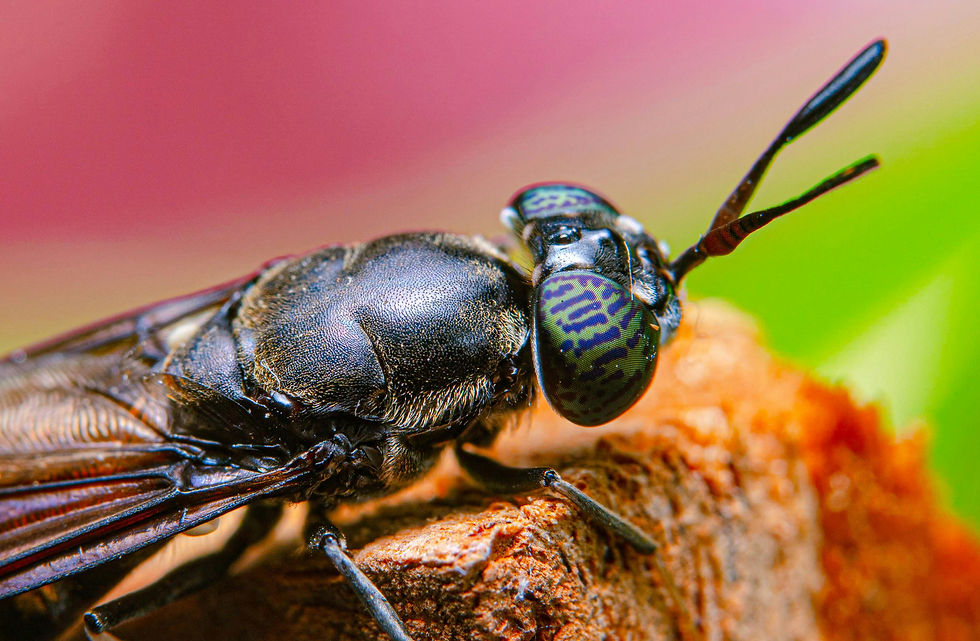
Traditional chitosan derives from marine crustacean shells, raising concerns about supply variability, overfishing, and potential shellfish allergenicity. Black Soldier Fly (BSF) derived chitosan addresses these issues directly. BSF farming bioconverts organic waste into high-value biomass: larvae are harvested for protein and lipids, whilst pupal exuviae provide chitin for chitosan extraction.
BSF chitosan offers multiple advantages for ag-chem supply chains. BSF farming does not deplete wild fish stocks, ensuring consistent supply independent of seasonal fisheries. BSF chitosan avoids shellfish allergen pathways, improving safety profiles for food contact applications. Controlled BSF production yields chitosan with consistent molecular weight, deacetylation degree, and purity, which is critical for formulation performance and regulatory compliance. Life cycle analyses show BSF farming carries significantly lower carbon and water footprints than conventional marine harvesting, supporting supply chain decarbonisation goals.
Conclusion
Chitosan's dual action, combining direct pathogen suppression with plant defence priming, delivers broad-spectrum protection across diverse crop systems. Its regulatory status as a low-risk basic substance aligns with global pesticide reduction mandates including the EU Farm to Fork target of 50% chemical pesticide reduction by 2030. Its compatibility with biological control agents and cultural practices makes it a genuine IPM integrator. And the emergence of BSF-derived chitosan adds compelling circular economy credentials, offering consistent quality, reduced marine impacts, and stronger ESG narratives for ag-chem companies and growers seeking to build cleaner, more resilient crop protection programmes.


Comments