


Stopping the Bleed: Chitosan Haemostatic Agents in Emergency and Surgical Care


Introduction: The Challenge of Uncontrolled Haemorrhage
Uncontrolled haemorrhage represents the single leading cause of preventable death in trauma, battlefield, and surgical settings. Analysis of over 4,500 battlefield fatalities between 2001 and 2011 revealed that 87.3% of all injury mortality occurred in the pre-medical treatment facility environment, with haemorrhage accounting for 90.9% of potentially survivable acute deaths (Eastridge et al., 2012). In civilian trauma settings, haemorrhage ranks as the second leading cause of death, with the challenge amplified by increasing anticoagulant therapy usage and coagulopathic conditions (Gheorghita et al., 2023).
Most battlefield casualties die of injuries before ever reaching a surgeon, making rapid, effective, field-deployable haemostatic agents essential for survival (Eastridge et al., 2012). Chitosan-based haemostatic dressings have emerged as proven, biocompatible, rapidly acting agents already deployed in military and clinical settings worldwide. Now available from a sustainable Black Soldier Fly (BSF) source, they eliminate shellfish allergy risks whilst providing pharmaceutical-grade consistency and traceability.
The Multi-Mechanism Haemostatic Action of Chitosan
Chitosan achieves haemostasis through a sophisticated, multi-pathway mechanism that operates independently of the classical coagulation cascade, a critical advantage in patients with coagulopathies or those receiving anticoagulant therapy (Lee et al., 2024; Pogorielov et al., 2015).
Electrostatic Aggregation and Physical Barrier Formation

The cornerstone of chitosan's haemostatic efficacy lies in its polycationic amino groups (NH3+), which protonate under acidic conditions and carry a strong positive charge. These positively charged groups create immediate electrostatic attraction to the negatively charged surfaces of erythrocytes and platelets, inducing rapid aggregation and adhesion at the wound site (Gheorghita et al., 2023; Pogorielov et al., 2015). This interaction forms a mucoadhesive barrier that creates a tight physical seal over bleeding sites, concentrating blood cells and clotting factors locally (Gheorghita et al., 2023).
Recent research by Lee et al. (2024) demonstrated that chitosan directly activates platelets through Toll-like receptor 2 (TLR-2) signalling, inducing calcium influx and integrin activation. This TLR-2-mediated pathway remains effective even in the presence of anticoagulant and antiplatelet therapies, explaining chitosan's superior performance in coagulopathic bleeding (Lee et al., 2024).
Water Absorption and Antimicrobial Protection
Upon contact with blood, chitosan's high water absorption capacity rapidly concentrates erythrocytes and platelets at the injury site, whilst its porous three-dimensional structure provides a scaffold for fibrin deposition and clot maturation (Gheorghita et al., 2023). Chitosan's polycationic structure also confers broad-spectrum antimicrobial activity against both Gram-positive and Gram-negative bacteria, including MRSA, Pseudomonas aeruginosa, and Escherichia coli (Hu et al., 2023; Gheorghita et al., 2023). This dual haemostatic-antimicrobial action provides simultaneous bleeding control and infection prevention in traumatic wounds, battlefield injuries, and surgical sites (Gheorghita et al., 2023; Hu et al., 2023).
Clinical Applications and Product Formats
Battlefield and Pre-Hospital Trauma Care
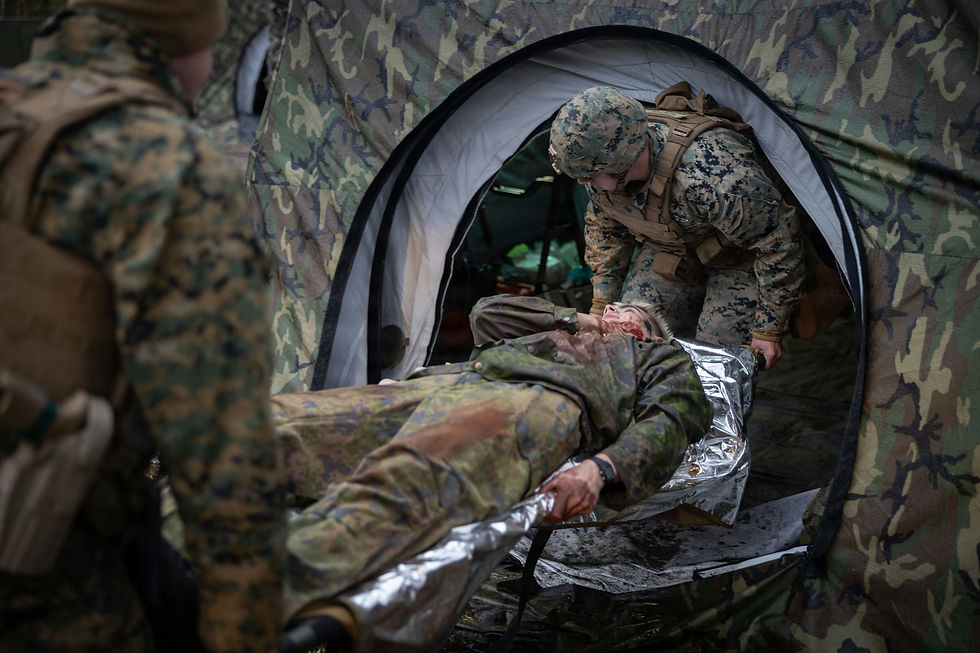
Chitosan-based haemostatic dressings have achieved regulatory approval and extensive battlefield deployment. HemCon chitosan-based dressings were approved by the US FDA for haemorrhage control and demonstrated a 100% success rate in field use after gauze failure in Operation Iraqi Freedom and Operation Enduring Freedom, with 97% of 64 unique combat uses resulting in cessation of bleeding or improved haemostasis (Wedmore et al., 2006).
In a swine model of femoral artery haemorrhage, chitosan sponge dressings achieved haemostasis within 2.67 ± 0.58 minutes, compared to over 100 minutes with commercial gauze, with survival time dramatically prolonged beyond 180 minutes relative to gauze controls (60.92 ± 0.69 minutes) (Wang et al., 2019). Axiostat chitosan haemostatic dressing received 510(k) FDA clearance as India's first wound care product approved in the United States, designed to stop uncontrollable bleeding within two to three minutes of application (Health Economic Times, 2018).
Surgical Haemostasis
Chitosan-based dressings demonstrate superior haemostatic performance across diverse surgical applications. Clinical studies evaluating Axiostat in femoral arterial access site closure following cardiac catheterisation showed effective haemostasis within 2 minutes (Gheorghita et al., 2024). In dental surgery, chitosan dressings achieved haemostasis in 83.1% of extraction sites within 10 minutes in anticoagulated patients, compared to only 18.8% of gauze-compressed control sites, with mean haemostasis times of 15.10 ± 12.88 minutes versus 45.20 ± 20.62 minutes (Rao et al., 2018).
Emergency Medicine and Chronic Wound Care
ChitoGauze demonstrated approximately 70% cessation of haemorrhage and 20% reduced haemorrhage in prospective prehospital studies (Gheorghita et al., 2023). The coagulation-independent mechanism ensures reliable performance across diverse patient populations, including those on anticoagulant therapy or presenting with trauma-induced coagulopathy (Lee et al., 2024).
Beyond acute trauma, chitosan dressings provide benefits in chronic wound management. Clinical trials in diabetic foot ulcers demonstrated median 92.0% wound surface area reduction with chitosan gel versus 37.0% with placebo (p=0.008), with a 4.62-fold higher likelihood of achieving at least 75% closure (Slivnik et al., 2024).
Product Formats
Chitosan haemostatic products are available in diverse formats optimised for specific clinical scenarios. Haemostatic gauze and wound packing dressings, including HemCon Bandages, ChitoGauze, Celox Rapid, and Axiostat, are widely deployed in trauma and battlefield settings (Wedmore et al., 2006; Gheorghita et al., 2023). Three-dimensional porous sponges provide high surface area for rapid blood absorption, whilst injectable chitosan hydrogels enable minimally invasive delivery for internal bleeding control (Wang et al., 2019; Gheorghita et al., 2023).
Combination products pairing chitosan with kaolin, zeolite, calcium, or thrombin leverage synergistic mechanisms across multiple coagulation pathways (Elsabahy and Hamad, 2021; Gheorghita et al., 2023). Emerging formats include nano-chitosan formulations and aerosolised sprays such as BC3 Technologies' FDA-cleared SEAL Wound Spray (Kim et al., 2024; BC3 Technologies, 2023).
Performance Benchmarks and Regulatory Standing
Meta-analyses show chitosan reduces haemostasis time by 75% compared to gauze: 1 minute 19 seconds versus 5 minutes 19 seconds (p<0.0001) in chronic wound bleeding control (Snyder and Sigal, 2024). In femoral arterial access closure, HemCon pads reduced time-to-haemostasis to 5.6 ± 2.1 minutes compared to 8.4 ± 3.5 minutes with regular pads (p<0.001) (Yosef et al., 2011). Pre-clinical swine models demonstrate chitosan dressings reducing average blood loss to 15.09 mL/kg compared to 42.16 mL/kg for gauze (Baker et al., 2012).
Multiple chitosan haemostatic devices have achieved FDA 510(k) clearance and CE marking, including HemCon Bandages, Axiostat, ChitoGauze, and BC3 Technologies' SEAL Hemostatic Wound Spray (Wedmore et al., 2006; Health Economic Times, 2018; BC3 Technologies, 2023). Biocompatibility testing follows ISO 10993 standards, encompassing cytotoxicity, sensitisation, irritation, and haemocompatibility assessments (Gheorghita et al., 2024). Chitosan demonstrates excellent biocompatibility and biodegradability, degrading enzymatically into non-toxic oligosaccharides, with minimal adverse events reported across extensive clinical and battlefield deployment (Wedmore et al., 2006).
The Black Soldier Fly Sourcing Advantage

Traditional chitosan production relies on crustacean shells, creating dependency on fluctuating marine fisheries, environmental concerns, and potential shellfish allergen contamination. Most allergic reactions to shellfish originate from residual proteins in crustacean-derived chitosan, presenting risks in sensitive patient populations (Tricol Biomedical, 2021).
Black Soldier Fly (Hermetia illucens) chitosan offers a transformative alternative with several key advantages. BSF-derived chitosan is endotoxin-free, eliminating shellfish-associated allergic reaction risks in medical applications where patient sensitivity profiles may be unknown (Chitosan Global, 2020; Shield Nutraceuticals, 2024). BSF larvae efficiently convert organic waste into valuable biomass comprising 15 to 20% chitin dry weight, with year-round, controlled land-based cultivation ensuring consistent supply independent of seasonal fisheries (Lin et al., 2021; Demianenko et al., 2024).
BSF-derived chitosan demonstrates antimicrobial efficacy equivalent to or superior to crustacean sources against common pathogens, whilst meeting biomedical and pharmaceutical standards through optimised extraction methods that minimise toxic residues (Siddiqui et al., 2024; Montoya-Ballesteros et al., 2025). BSF cultivation under controlled, HACCP-compliant conditions enables precise control of molecular weight, degree of deacetylation, and purity, with batch-to-batch consistency and full regulatory documentation (Chitosan Global, 2020; Entoplast, 2024). BSF-derived chitosan also aligns with global ESG commitments, offering cruelty-free, vegan positioning and circular economy credentials increasingly demanded by hospital procurement teams and medical device manufacturers (Entoplast, 2024).
Conclusion
Chitosan haemostatic agents represent proven, multi-mechanism solutions for bleeding control across battlefield trauma, surgical, emergency, and chronic wound care settings. The electrostatic aggregation of blood cells, TLR-2-mediated platelet activation, physical barrier formation, and concurrent antimicrobial activity create a haemostatic platform that operates independently of classical coagulation pathways, enabling reliable performance in coagulopathic conditions and anticoagulated patients. Extensive clinical evidence, FDA clearance, CE marking, and battlefield validation confirm chitosan's superior performance relative to conventional dressings.
Black Soldier Fly-derived chitosan delivers equivalent clinical performance with a superior sustainability, safety, and quality profile. The elimination of shellfish allergen risk, coupled with pharmaceutical-grade consistency, traceable circular production, and ESG alignment, positions BSF chitosan as the optimal raw material for next-generation haemostatic medical device development.
Entoplast specialises in producing medical-grade chitin and chitosan from Black Soldier Flies, ensuring premium quality biomaterials with full regulatory documentation and quality assurance support. We invite medical device manufacturers, surgical supply companies, trauma care product developers, and biomedical R&D teams to contact Entoplast for BSF chitosan grades, technical data packages, and collaborative development support for advanced haemostatic products.
Contact Entoplast today at hello@entoplast.com to discuss how our BSF-derived chitosan can advance your haemostatic device innovation pipeline.


Comments